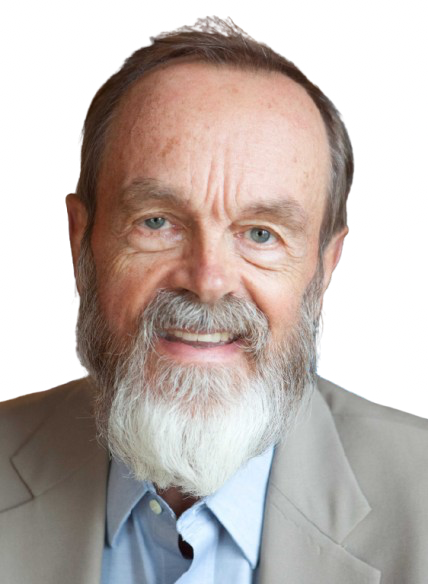
The conversation
The Democratic Imagination: Philip Kitcher on Science and Ethics
Synthetic philosopher Philip Kitcher shares his transition from mathematical logic to public-facing philosophy, mapping his famous critiques of creationism and genetic determinism. He discusses the profound influence of John Dewey on his work, the development of "pragmatic realism," and why the ultimate future of human progress depends on aligning scientific priorities with democratic public goods and radical social empathy.
6Degrees
Philip Kitcher’s path into philosophy began with what he calls “good advice and a bit of serendipity.” As a math student at Cambridge, he realized he was “getting progressively less interested in mathematics,” until one supervisor told him bluntly that if he continued, he’d “end up like me—I’m only in Cambridge for the music.” That moment set him on a new course.
Philip Kitcher
I decided to do the one-year course in the history and philosophy of science, thinking I’d study the history of astronomy. The growth of scientific knowledge seemed much more fascinating than any problem I might deal with as a mathematician.
6Degrees
At Princeton, Kitcher studied with Carl Hempel—known to everyone as Peter—and briefly with Kuhn himself.
Philip Kitcher
Hempel was an absolutely wonderful human being as well as a marvelously clear teacher. He gave me a real sense of what it is to understand something very clearly and to work on it rigorously.
6Degrees
Kuhn, though disillusioned with the discipline at the time, left a lasting mark as well.
Philip Kitcher
I learned from him how to think about the history of science.
6Degrees
His philosophical range soon broadened dramatically. While teaching at the University of Vermont, a pre-med student once challenged him: why did every example in his philosophy of science class come from physics?
Philip Kitcher
That was a very good criticism. So I went to the library, found David Hull’s Philosophy of Biological Science, and said to myself: this is utterly fascinating.
6Degrees
That discovery led him to Harvard’s Museum of Comparative Zoology, where he spent a sabbatical embedded among biologists like Richard Lewontin, Ernst Mayr, and Stephen Jay Gould.
Philip Kitcher
It was an extraordinary experience. A one-year crash course in all sorts of issues in biology.
6Degrees
That immersion in science deepened his sense of what philosophy could do.
Philip Kitcher
From the very beginning I was interested in cross-disciplinary work. Philosophers don’t have some special esoteric understanding of the world. What we do is try to take all the various areas of knowledge and the variety with which people live, and fit them together into a larger picture.
6Degrees
He calls this approach synthetic philosophy—the kind of wide learning and integration that he believes marks the great thinkers in history.
Philip Kitcher
Philosophy’s central task is to suggest new ways of looking at things.
6Degrees
Kitcher’s first major public-facing book, Abusing Science, came about through another twist of chance.
Philip Kitcher
I got the flu. Sitting in front of the TV, I saw an ad for a book called The Remarkable Birth of Planet Earth. I wrote off for it—it turned out to be a creationist text.
6Degrees
Reading it, he realized most people he knew “would be unable to answer its challenges.” He began giving talks, which soon led to a contract from MIT Press.
Philip Kitcher
It was a bit too uncharitable to creationists as people, but as thinkers, they deserved criticism.
6Degrees
The book became a touchstone in debates over evolution and science education.
His next work, Vaulting Ambition, took aim at sociobiology’s attempts to reduce human behavior to evolutionary formulas.
Philip Kitcher
My mathematical training really helped. I found fault with the models. They took far too much for granted.
6Degrees
More deeply, he objected to extrapolating from insect colonies to human societies.
Philip Kitcher
The environments are much more complicated in the human case. There’s genuine gene–culture coevolution, and ignoring that leads to error.
6Degrees
That argument, alongside books by Lewontin, Rose, and Kamin, helped redirect evolutionary thought away from genetic determinism.
Kitcher’s later engagement with the Human Genome Project shifted his focus toward the ethics and governance of science.
Philip Kitcher
It was that experience—going to Washington, talking to congressional staffers—that made me realize there’s a channel of transmission from research to policy to the public. Philosophers had completely neglected how science relates to the public good.
6Degrees
From that realization came Science, Truth, and Democracy and a series of works arguing that scientific priorities should be democratically guided.
Philip Kitcher
It’s very easy for fields of science to drift away from the concerns of a larger group of people. We need mechanisms to focus research on questions people would agree are significant if they truly understood one another’s needs.
6Degrees
That conviction led Kitcher deep into ethics and political philosophy, and eventually to John Dewey. “When I came to Columbia, Sidney Morgenbesser said to me, ‘You sound just like Dewey—have you read him?’ I said, ‘No, he’s impossible to understand!’” He laughs.
Philip Kitcher
No, he’s impossible to understand! But Sidney told me to read The Quest for Certainty, and I was amazed. Dewey had been working toward all kinds of things I had struggled to articulate. My reading of him has always been a conversation between Dewey and me.
6Degrees
Kitcher’s mature philosophy—what he calls pragmatic realism—weaves these threads together.
Philip Kitcher
When we find something that works, we try to generalize it, to see where it works and where it breaks down. That’s how knowledge grows. It’s pragmatic, but it’s also realist, because success depends on how reality pushes back against us.
6Degrees
The result is a view of objectivity as what happens when “the key fits the lock”—when an approach reliably opens doors across different contexts.
His most recent book, The Rich and the Poor, turns these ideas toward inequality and climate change.
Philip Kitcher
Ethical life has been around for 50,000 to 100,000 years. It co-evolved with language as humans learned to cooperate.
6Degrees
For Kitcher, moral progress arises when people learn to “get inside another person’s head—to see the world from their perspective.” That empathy, he argues, is the engine of moral advance:
Philip Kitcher
It’s what ended slavery, expanded opportunities for women, and changed attitudes toward sexuality.
6Degrees
But he worries that the modern world is turning its back on that ethical capacity.
Philip Kitcher
When you remove thinking about what’s good for everybody in the name of economic efficiency, you’re turning your back on what has made human progress possible. Without a more egalitarian society, we won’t get the cooperation we need, and the future will be very hard indeed.
6Degrees
Asked how he defines success, Kitcher’s answer is simple:
Philip Kitcher
If I’ve given people an idea or approach that can make their lives go better, then that’s success for me.