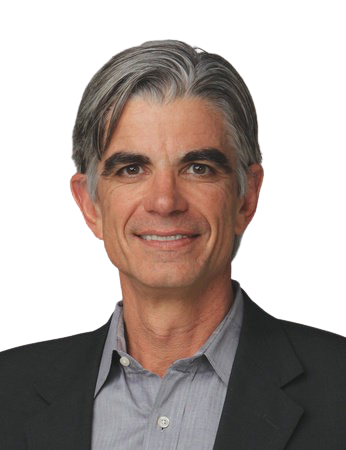
The conversation
The Cost of Convenience: Michael Moss on Corporate Food Power
Pulitzer Prize winner Michael Moss shares his journey from a high school student with a knack for reporting to a New York Times investigator. He details the strategic use of insider documents, the parallel tactics of Philip Morris and Coca-Cola, and why the ultimate barrier to healthy eating in America isn't a lack of personal willpower, but a deeply flawed economic system that makes processed calories cheaper than real food.
6Degrees
Michael Moss never set out to be an investigative journalist.
Michael Moss
I was a really obnoxious kid who was always asking why.
6Degrees
But a high school English teacher in San Francisco changed everything when she sent her students out to report a story. Moss handed in his first article, and the next day she told him,
Michael Moss
You know, Michael, I think you have a knack for this. And by the way, there are people who will actually pay you to wander around the world learning things and writing them down.
6Degrees
From that moment, he was hooked.
At San Francisco State, a professor encouraged him to skip class to write for the Sierra Club. Moss never graduated—he chose the newsroom over the classroom.
Michael Moss
I was kind of too impatient to finish school.
I was having too much fun already.
6Degrees
His first newspaper had just 4,000 readers in Wyoming, but his editors were “fantastic teachers”—sometimes harsh ones.
Michael Moss
The vividness of learning on the job was really good for me.
6Degrees
His career would take him from local newsrooms to war zones and, ultimately, to the New York Times, where his investigations reshaped how Americans think about food. Moss still remembers how little interest he first had in the story that would define his career—the 2008 salmonella outbreak at a Georgia peanut plant.
Michael Moss
My first reaction when my editor suggested it was to walk away.
6Degrees
He’d just returned from Iraq, pitching stories on U.S. arms sales. But his editor, Christine, calmly reframed it:
Michael Moss
Think about the gravity of this. Little kids are eating these peanuts and getting sick or dying… there’s no one else we can blame for this catastrophe.
6Degrees
That conversation pulled him into a deeper realization: the real stakes of everyday food.
Michael Moss
You read everything you possibly can of investigative reporting.
Michael Moss
Not just gathering facts, but gathering the names of people who might talk to you.
6Degrees
Trade publications, insider documents, and long flights to meet reluctant sources are his bread and butter.
Michael Moss
Documents are the backbone.
6Degrees
But so are people.
Michael Moss
The combination of finding insider documents that were never meant to be public, and then convincing the people who wrote them to explain them—that’s where the real story comes from.
6Degrees
Moss’s 2009 New York Times investigation into a single contaminated hamburger traced how one meal paralyzed a 22-year-old dance instructor and exposed deep flaws in meat safety.
Michael Moss
I was looking for one hamburger, one situation—otherwise the information could just get dry and overwhelming.
6Degrees
The day after publication, the USDA ordered a nationwide review of meat inspection practices. His follow-up stories and books, Salt Sugar Fat and Hooked, uncovered the corporate engineering behind processed foods. Moss discovered a huge trove of memos and emails released through tobacco litigation that revealed Philip Morris—then the largest tobacco and food company—using the same psychological and chemical playbook to sell snacks.
Michael Moss
Reporters really hadn’t ever looked at that material from a food perspective.
6Degrees
The parallels between Big Tobacco and Big Food run deep. Executives, Moss found, rationalized their roles with a kind of moral distance.
Michael Moss
They invented these products in a much more innocent era, before marketing went crazy and deepened our dependence on them.
6Degrees
Some, like former Coca-Cola president Jeffrey Dunn, later switched sides, launching campaigns to sell vegetables instead of soda. For Moss, these stories aren’t about villains—they’re about systems.
Michael Moss
These are companies doing what most companies want to do: make as much money as possible by making their product as attractive as possible.
6Degrees
The root, he argues, lies in capitalism itself.
Michael Moss
It rewards profit over everything else.
6Degrees
He contrasts Costco—whose membership model aligns profit with consumer trust—with the typical food corporation, where safety isn’t as profitable as shelf life.
6Degrees
Policy solutions like soda taxes can help, Moss notes, but it’s hard to get anything like that done.
Michael Moss
Unlike tobacco, you can’t hold up Oreo cookies and blame them for making the country sick.
6Degrees
Processed food is too ubiquitous, too woven into everyday life. And while Europe has introduced warning labels and traffic-light systems, Moss cautions that companies simply reposition their ingredients to dodge regulation.
Still, he’s hopeful about small, personal revolutions. Cooking from scratch, he says, doesn’t have to be slow or elitist:
Michael Moss
My recipe for spaghetti sauce takes 90 seconds—plum tomatoes, olive oil, garlic, basil. Cooking from scratch doesn’t have to be time-consuming, and it makes us mindful and appreciative of the food.
6Degrees
He recognizes, though, that not everyone has that luxury.
Michael Moss
I’m thinking about people in Kansas shopping at Walmart.
6Degrees
A basket of blueberries can cost as much as a two-pound frozen pizza with four meats and three cheeses. For many, the real challenge isn’t willpower—it’s economics.
Moss defines success as changing minds—especially expert ones.
Michael Moss
The biggest reward is getting great feedback from somebody who knew the subject I was writing about.
6Degrees
Personally, success means something simpler:
Michael Moss
Getting to the top of the mountain—and back down safely.