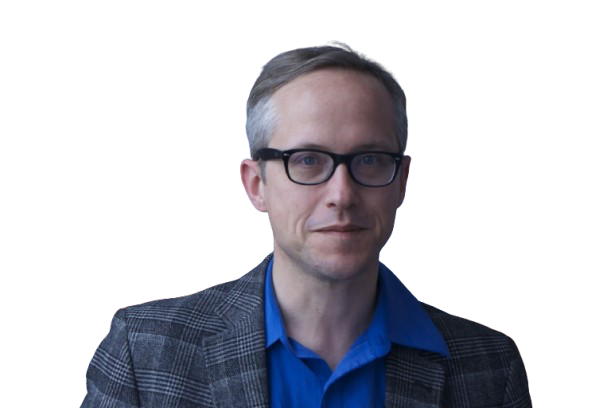
The conversation
The Psychedelic Lens: Justin Smith-Ruiu on Reality, AI, and the Mind
Epistemologist Justin Smith-Ruiu examines the boundaries of human knowledge and perception, arguing that altered states of consciousness expose the fallibility of our "sober" worldview. He shares insights on the economic threat of competent AI to creative professions, the freedom of intellectual life on Substack, his personal return to faith, and why true success means shifting away from external validation to let the work speak for itself.
6Degrees
Justin Smith-Ruiu didn’t come to psychedelics as an advocate or enthusiast—quite the opposite.
Justin Smith-Ruiu
I wouldn’t say that at this point in my life I’m into psychedelics except as a topic of research.
6Degrees
What drew him in wasn’t the cultural lore around them but the deep philosophical questions they raise about how humans perceive and understand reality. For a philosopher who specializes in epistemology—the study of knowledge—psychedelics offer something irresistible: a naturally occurring challenge to our most basic assumptions. Philosophers, he argues, have long known that perception doesn’t deliver the world as it actually is. He offers classic examples: a straight reed looks bent underwater, a desert mirage mimics an oasis. Given that our sober perception is already filtered and fallible, Smith-Ruiu asks: Why assume that normal consciousness is the privileged lens through which to understand reality? Psychedelics don’t reveal truth outright, he insists, but they expose our overconfidence—our conviction that we’ve asked all the good questions already.
His goal in writing about them was to approach the topic as a respectable person, like a soberminded adult, navigating what he calls a difficult chicken walk right in the middle of the road. The book is not advocacy; it’s an attempt to take seriously a form of human experience that philosophy has largely ignored. In recent years, though, another fascination has taken hold: the prospect of consciousness uploading. Will we someday be able to evade mortality, he asks, by transferring the program that makes us who we are from biological neurons to silicon? Philosophers and technologists disagree sharply: some argue that consciousness is substrate-neutral; others believe that only living, evolved neurons can support subjective experience. Smith-Ruiu is skeptical of imminent AI consciousness, but he argues that working through the question forces clarity.
Justin Smith-Ruiu
It’s fun. The world we live in is becoming increasingly a science fiction world.
6Degrees
Psychedelics, he emphasizes, don’t answer philosophical questions—but they shake our complacency. They unsettle the belief that our current frameworks are adequate. Extreme states—whether induced by substances, ritual practices, or simply by dreaming—confound our optimism that the world is something we can easily make sense out of. Philosophy, unlike physics, requires constantly asking whether the questions themselves are right. Psychedelics remind us how hard that task truly is. Ethically, he draws a firm line.
Justin Smith-Ruiu
Don’t do anything to anyone else that they don’t want done to them.
6Degrees
The story of Timothy Leary spiking students’ drinks is, for him, the clear boundary not to cross. But for adults making their own choices, he leans libertarian: If you want to do something that might harm you yourself, but doesn’t harm other people, I tend to think that’s your right.
When it comes to artificial intelligence, Smith-Ruiu is less worried about evil robot overlords than about the immediate socioeconomic shocks. Two or three years from now, we might not have viable careers anymore, he says of writers, professors, journalists—anyone whose livelihood depends on words. The harm doesn’t require AI to be conscious; it only requires that it be competent. The transformation, he argues, parallels earlier technological revolutions: A lot of people lost their jobs when the printing press came along… this is just part of the course.
One of the biggest changes in his own life has been launching his Substack in 2020. He describes it as a liberation from academic constraints and a place where hybrid intellectual work—half scholar, half influencer—can flourish.
Justin Smith-Ruiu
The past five years have been the most creative and productive of my adult career.
6Degrees
Substack, he argues, has become where the smart people from Twitter went into exile when Twitter disappeared. It’s slower, more reflective, and crucially subscription-based, freeing writers from the incentives of ad-driven platforms. His online project The Hinternet blends essay, fiction, and persona—sometimes without signaling which is which. Critics accuse him of deepening the post-truth murkiness, but Smith-Ruiu argues the opposite: We’re not making the problem worse; we’re thematizing the problem. By forcing readers to work out what is real and what isn’t, he hopes to sharpen their epistemic reflexes, not dull them.
One claim in his psychedelic book he expected colleagues to resist most strongly was his account of returning to Catholicism. Many philosophers, he notes, view religious faith as childish or irrational, a rejection of naturalism. But the destabilizing experiences he explored pushed him in the opposite direction. Writing the book emboldened me to say nah, I’m kind of into religious faith—it’s for me.
When asked about success, he’s disarmingly candid.
Justin Smith-Ruiu
It would be good if more of us could just admit that we like acclaim. Success… is maneuvering yourself into a mode of work where the external motivations fall away and all that matters is the work itself.
6Degrees
And his advice to young people? Don’t wait too long to become yourself. You have to subordinate yourself to your elders for a significant portion of your earlier life, he acknowledges. But eventually you must disappoint them in the right direction—toward the path that matches who you know yourself to be.
Justin Smith-Ruiu
The goals that will matter most are the ones you set yourself.