The conversation
The Politics of Imagination: Ian Lustick on Identity and Power
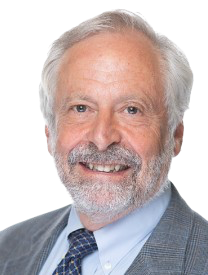
Political scientist Ian Lustick traces his journey from studying the relationship between authority and dissent to analyzing the complex realities of the Middle East and U.S. foreign policy. He discusses why national borders are political achievements rather than permanent fixtures, how nations construct versions of reality to sustain systems of control, and why true intellectual breakthrough requires the courage to dismantle our most cherished cultural myths.
6Degrees
Ian Lustick’s journey into political science began in the turbulence of the late 1960s.
Ian Lustick
I was a freshman at Brandeis in 1965. It was a time of moral upheaval—the civil rights movement, Vietnam, the Six-Day War. Everyone was searching for meaning.
6Degrees
For Lustick, that search quickly became political.
Ian Lustick
I was drawn to questions of authority and dissent. Why do people obey? Why do they resist?
6Degrees
A turning point came when he transferred to Harvard and began studying with Karl Deutsch, a towering figure in political sociology.
Ian Lustick
Deutsch was my most important mentor. He taught me that power isn’t just coercion—it’s communication. It’s the ability to make your version of reality the one that others live in.
6Degrees
That idea—how political systems construct and sustain belief—would become central to Lustick’s career.
His doctoral work focused on the politics of Israel, where he spent years in the field interviewing government officials, settlers, and Palestinian citizens.
Ian Lustick
I was struck by how deeply myths shape political behavior. In Israel, national identity and sacred history intertwine in ways that make compromise incredibly difficult.
6Degrees
His book Arabs in the Jewish State (1980) broke new ground, revealing how Israel’s democracy coexisted with a system of control over its Arab minority.
Ian Lustick
That work made some people very angry. But it also opened a space for critical scholarship about the Israeli state.
6Degrees
Lustick’s research evolved into a broader investigation of what he calls state expansion and contraction.
Ian Lustick
States are living systems. They grow, adapt, and sometimes overreach.
6Degrees
In his influential book Unsettled States, Disputed Lands, he examined how countries—from Israel and Northern Ireland to Morocco and Indonesia—manage territorial claims and nationalist movements.
Ian Lustick
We tend to think of borders as fixed. But in reality, they’re political achievements that can erode just as easily as they form.
6Degrees
A recurring theme in Lustick’s work is the power of collective imagination.
Ian Lustick
Politics is about what people believe is possible. Most conflicts persist because people can’t imagine alternatives.
6Degrees
That insight shaped his analysis of the U.S.–Israel relationship, which he argues has been constrained by powerful myths.
Ian Lustick
For decades, American politics has been organized around the idea of Israel as a moral beacon. That makes it very hard to see the occupation for what it is.
6Degrees
His 2019 book Paradigm Lost traces how those narratives—rooted in the trauma of the Holocaust and the Cold War—have shaped American policy long after they lost their explanatory power.
Lustick’s recent work turns inward, toward what he calls the psychology of belief.
Ian Lustick
I became fascinated by how scholars, including myself, get trapped in paradigms. We all tell stories that help us make sense of the world. The problem is, those stories can become prisons.
6Degrees
In Paradigm Lost, he compares his own intellectual journey to that of an addict recovering from illusion.
Ian Lustick
Letting go of cherished ideas can feel like a kind of death. But it’s also liberating.
6Degrees
That theme—intellectual honesty as moral courage—runs through his teaching at the University of Pennsylvania, where he has inspired generations of students to challenge orthodoxy.
Ian Lustick
I tell my students: your job isn’t to defend what you already believe. It’s to ask the question that scares you the most.
6Degrees
His method combines rigorous modeling with deep historical empathy.
Ian Lustick
You need both the data and the imagination. Otherwise you’re just doing arithmetic with people’s lives.
6Degrees
Beyond academia, Lustick has been a public voice on Middle East policy, often pushing back against simplistic narratives.
Ian Lustick
The job of a scholar is not to comfort power. It’s to describe reality as clearly as possible, even when that reality is uncomfortable.
6Degrees
Yet he remains cautiously hopeful.
Ian Lustick
The future isn’t predetermined. Politics is about expanding the range of what’s thinkable. Once people can imagine a better world, they can start to build it.
6Degrees
Asked what keeps him motivated after decades in the field, Lustick smiles.
Ian Lustick
Curiosity. And a sense of moral responsibility. If you have knowledge—if you’ve seen behind the curtain—you can’t pretend you haven’t.