The conversation
Targeted Hope: Dr. Banu Arun on Advancing Breast Cancer Prevention
Breast medical oncologist Dr. Banu Arun details her journey from studying newly identified BRCA1 and BRCA2 genes to expanding genetic testing access for underserved communities via mobile mammograms. She highlights the critical balance between clinical interventions and lifestyle adjustments, the emerging role of algorithmic AI in calculating deeply personalized cancer risk profiles, and why true professional success is measured by personal and emotional fulfillment rather than climbing institutional ladders.
6Degrees
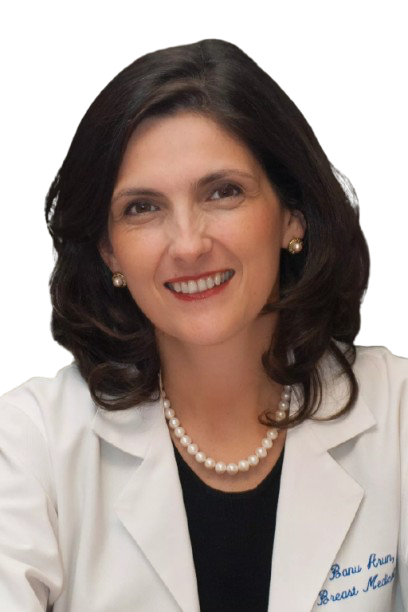
Dr. Banu Arun is a leading oncologist specializing in breast cancer treatment and prevention. From her early aspirations of becoming a pediatrician to her groundbreaking work in oncology, Dr. Arun has dedicated her career to advancing genetic testing, expanding access to care, and improving patient outcomes. In a candid interview, she shared the experiences and insights that have shaped her journey and her vision for the future of cancer prevention.
For Dr. Arun, the dream of becoming a doctor was rooted in her earliest memories.
Dr. Banu Arun
It sounds very cliché, but it really was. I never considered any other profession. Since my earliest memories, I always thought, ‘I will be a doctor,’ and I thought I would be a pediatrician.
6Degrees
Initially envisioning a career as a pediatrician, her aspirations evolved during medical school when she became fascinated by breakthroughs in immunotherapies and targeted therapies. This led her to pursue internal medicine and eventually oncology, where she found her true calling.
During her fellowship at Georgetown University’s Lombardi Cancer Center, Dr. Arun’s focus narrowed further to breast cancer.
Dr. Banu Arun
When I was a fellow, I did my fellowship at Georgetown University Hospital, Lombardi Cancer Center. The program director, Mark Lipman, was a breast medical oncologist. He was very well-rounded, not only as a clinician but also as a researcher. So, I got very much inspired by him for breast cancer treatment as well as prevention.
6Degrees
Dr. Arun’s work has been deeply influenced by advancements in genetic research and technology. When she began her oncology training, BRCA1 and BRCA2 genes had only recently been identified as indicators of breast cancer risk.
Dr. Banu Arun
When I started, the BRCA1 and BRCA2 genes were just identified for us to understand that mutations in these genes increase breast cancer risk. But they were not really available for population-based testing. It was all done in labs under research. But the next-generation sequencing technology evolved, and that’s really enabled many people to get tested.
6Degrees
These developments revolutionized cancer prevention by enabling doctors to identify individuals at high risk and implement tailored screening and prevention strategies.
Accessibility to genetic testing has been a cornerstone of Dr. Arun’s recent research efforts. Partnering with organizations like CPRIT and the Susan G. Komen Foundation, she has worked to expand testing to underserved communities, including African American and Hispanic populations in Texas.
Dr. Banu Arun
We are going a little further out in Texas and using mobile mammograms to identify individuals who would be eligible for genetic testing but could never do it because they have no access, no money, no insurance, or they simply don’t know about it, or their physicians never referred them.
6Degrees
While genetic testing provides invaluable insights, Dr. Arun emphasized the importance of healthy lifestyle choices in reducing breast cancer risk.
Dr. Banu Arun
Healthy lifestyle is beneficial in terms of reducing the risk of breast and other cancers, but the magnitude is not very well known. For example, we know tamoxifen reduces breast cancer risk by 50% in high-risk women. Unfortunately, I cannot say the same for lifestyle changes because we don’t have those numbers.
6Degrees
Looking to the future, Dr. Arun sees tools like artificial intelligence (AI) playing a crucial role in personalizing cancer prevention strategies.
Dr. Banu Arun
AI can help put together an individual's risk based on lifestyle, body habits, and also genes, and calculate the risk. And then calculate what intervention can reduce risk or prevent cancer completely based on an algorithm for that specific person. For example, AI might show that a person with an 80% risk of breast cancer could lower it to 5% through specific measures. This level of personalization can help people make more informed decisions.
6Degrees
Beyond her research and clinical work, Dr. Arun has dedicated herself to spreading awareness about breast cancer in low- and middle-income countries. Collaborating with organizations like the WHO and MD Anderson’s global partnerships, she has focused on educating communities about the importance of early detection.
Dr. Banu Arun
Knowing your family history, being able to openly talk about that. And then, education that, you know, early cancer diagnosis. So early stages can save lives.
6Degrees
When asked what advice she would give to aspiring doctors and researchers, Dr. Arun emphasized the importance of finding a specialty that aligns with one’s passions.
Dr. Banu Arun
The new generation is very well suited to combine classical knowledge, education with new technology, whether it's imaging, whether it's robotic surgeries, you know, molecular diagnostics. Identifying your area of interest early and focusing on it can help you achieve meaningful results.
6Degrees
Reflecting on how she defines success, Dr. Arun highlighted personal fulfillment over professional accolades.
Dr. Banu Arun
So professional success is, I think, maybe not the highest rank you achieve, but your personal, emotional, and mental satisfaction. So for some people it's, being academics and moving up the career ladder. For some people it's, you know, doing private practice and doing a lot of surgeries. You know, the number of surgeries that's very important for some. And for some, it's a combination.
6Degrees
Dr. Arun’s career is a testament to the power of dedication, innovation, and compassion in the fight against breast cancer. Through her groundbreaking research, tireless advocacy, and commitment to expanding access to care, she continues to leave an indelible mark on the field of oncology and the lives of countless patients worldwide.